Imagine you have just moved into a beautiful new home in the Bay Area. The boxes are barely unpacked, yet a nagging thought keeps you awake at night. Who else might have a key to your front door? Previous owners, realtors, contractors, or neighbors could all possess copies you do not know about. Consequently, many homeowners immediately assume they must replace every lock. However, there is a smarter, faster, and more cost-effective solution available. What is lock rekeying and how does it work? This professional locksmith service changes the internal configuration of your existing lock so old keys become useless, while new keys grant seamless access. In other words, you keep your hardware and gain total control over who can enter your property.
Throughout this comprehensive guide, we will explore exactly what lock rekeying involves. Furthermore, we will examine when it is the right choice versus a full lock replacement. You will learn about the precise steps a technician follows, the types of locks that can be rekeyed, and the specific situations where this service delivers the greatest value. By the end, you will understand why so many Bay Area residents and business owners trust rekeying to protect their families, assets, and peace of mind.
What Is Lock Rekeying Exactly?
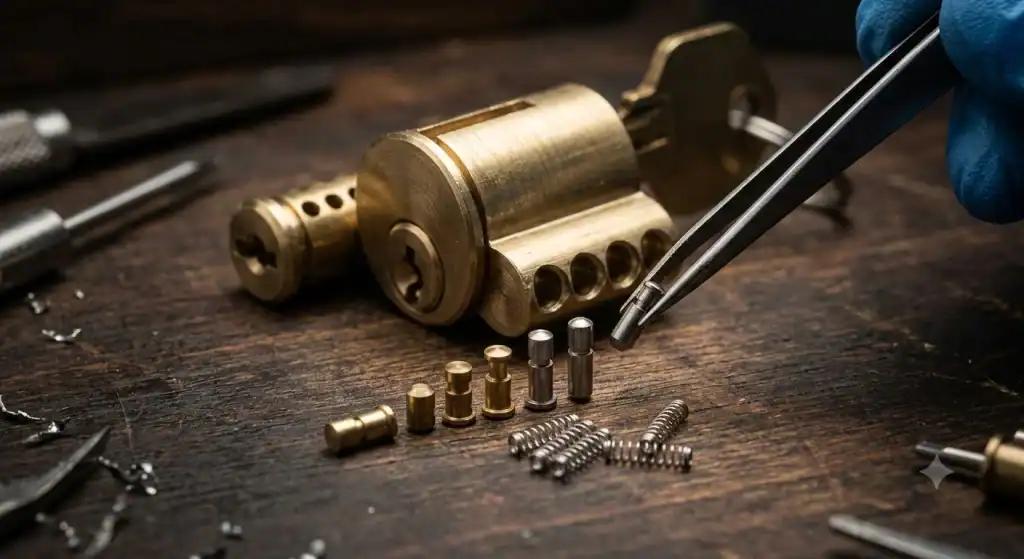
To begin with, let us define the core concept clearly. What is lock rekeying and how does it work at the most basic level? Rekeying is the process of altering a lock’s internal mechanism so it operates with an entirely new key. Importantly, the external lock hardware remains exactly the same. A skilled locksmith removes the cylinder, replaces the tiny pins inside, and creates a new key pattern that matches the updated configuration. Therefore, any previously copied keys, whether lost or unaccounted for, will no longer open the door.
Moreover, this service applies to far more than just front doors. In fact, you can rekey deadbolts, knob locks, padlocks, and even certain high-security commercial systems. The versatility of rekeying makes it an incredibly practical option for both residential and commercial clients throughout the Bay Area. Rather than purchasing multiple new lock sets, you simply update the internal coding. As a result, you maintain your existing aesthetic while dramatically improving your security posture.
Additionally, many people confuse rekeying with key duplication. These are fundamentally different services. Key duplication creates a copy of an existing key that works in the same lock. On the other hand, rekeying changes the lock itself to accept a completely different key. If you need spare copies of your new key after rekeying, you can explore our car key duplication services, or learn more about traditional and modern car key cutting methods for a broader understanding of key technologies.
How Does the Lock Rekeying Process Work?
Understanding the mechanics behind this service helps you appreciate why professional execution matters so much. What is lock rekeying and how does it work from a technical perspective? Although the concept seems simple, the actual procedure requires precision, specialized tools, and extensive training.
Step One: Removing the Lock Cylinder
First, the locksmith gains access to the lock cylinder. For most door locks, this involves removing the knob or deadbolt from the door. Next, the technician carefully extracts the cylinder plug, which houses the key pins and driver pins. This step demands a steady hand because the plug contains small springs that can easily launch across the room if handled improperly.
Step Two: Extracting the Old Pins
Once the cylinder is free, the locksmith dumps out the existing bottom pins. These pins correspond to the cuts on your old key. Because every key has a unique height pattern, the pins are arranged in a specific order. When you insert the correct key, it lifts all pins to the exact shear line, allowing the plug to rotate freely. Conversely, an incorrect key leaves pins protruding, blocking rotation.
Step Three: Installing New Pins
After clearing the old pins, the technician inserts a new set of bottom pins that match your new key’s bitting. This is the heart of the rekeying process. The new pins create an entirely different mathematical combination. Consequently, the old key will no longer lift the pins to the shear line. The locksmith must select each pin with absolute accuracy; even a fraction of a millimeter error will cause the lock to malfunction.
Step Four: Reassembling and Testing
Finally, the locksmith reassembles the lock, reinstalls it on the door, and tests the new key multiple times. Smooth insertion, clean rotation, and reliable bolt extension are all verified. Additionally, the technician ensures the lock still latches properly and that no components were damaged during disassembly. Once testing is complete, you receive your new keys along with the confidence that your property is secure.
If you are curious about similar processes for vehicles, our guide on what does rekeying a car involve breaks down automotive rekeying in detail.
When Should You Consider Rekeying Your Locks?
Timing matters significantly when it comes to physical security. What is lock rekeying and how does it work is only half the question; knowing when to schedule this service is equally important. Several life events and business changes create ideal opportunities for rekeying.
Moving Into a New Home
Whenever you purchase or rent a new property, rekeying should be your first security priority. You simply cannot know how many spare keys exist or who holds them. Previous occupants, cleaning crews, dog walkers, or maintenance staff may all have copies. Rather than worrying about unknown access, rekeying gives you a clean slate. You control exactly who receives the new keys from day one.
After a Breakup or Staff Departure
Personal relationships and professional teams change. When a roommate moves out, a relationship ends, or an employee leaves under difficult circumstances, access control becomes critical. Even if keys were returned, you cannot be certain copies were not made. Rekeying eliminates this uncertainty immediately. For business owners, our article on when should businesses rekey their locks provides deeper insights into workforce transitions.
Following a Lost or Stolen Key
Losing a key creates obvious vulnerability. If your keyring had an address attached, or if it was stolen rather than misplaced, the risk escalates dramatically. In these situations, speed is essential. A mobile locksmith can rekey your locks on the same day, restoring your security before any malicious actor attempts entry. For emergency scenarios, review our house lockout response strategies to understand how quickly professional help can arrive.
Upgrading Security Without Replacing Hardware
Sometimes your locks are perfectly fine aesthetically and functionally, yet you need a security refresh. Perhaps you handed out too many spare keys over the years, or you recently finished a renovation project with multiple contractors in your home. Rekeying allows you to reset access without the expense of buying all-new hardware. It is the ultimate middle ground between doing nothing and undertaking a full lock replacement.
Rekeying vs. Lock Replacement: Making the Right Choice
Many property owners struggle to decide between rekeying and replacing their locks entirely. What is lock rekeying and how does it work compared to installing brand-new hardware? Both services enhance security, yet they serve different needs and budgets.
Cost Considerations
Generally speaking, rekeying costs significantly less than replacement. You pay primarily for labor and a few small internal components, rather than purchasing complete lock sets. If you have multiple doors, the savings multiply quickly. For budget-conscious homeowners and small business owners in the Bay Area, this makes rekeying an attractive first option.
Hardware Condition
However, cost should not be your only factor. If your existing locks are damaged, corroded, outdated, or low-quality, rekeying will not fix those underlying problems. A weak lock rekeyed is still a weak lock. In these cases, investing in new, high-security hardware delivers superior long-term value. Our door lock replacement service offers modern options with advanced features like bump-proof cylinders and smart connectivity.
Aesthetic Preferences
Additionally, replacement allows you to update the look of your doors. If you are remodeling your home or rebranding your business, matching new locks to your updated style makes sense. Conversely, if you love your current hardware and it matches your decor perfectly, rekeying preserves that visual consistency while upgrading your security.
Master Key Systems
For commercial properties and multi-unit residential buildings, rekeying offers another powerful advantage. A professional locksmith can rekey multiple locks to work with a master key while maintaining individual unit keys. This hierarchical access system is difficult to achieve with off-the-shelf replacement locks unless you purchase specialized master key sets. Therefore, property managers often prefer rekeying for its flexibility and scalability.
To explore broader security upgrades, consider reading our guide on the complete guide to lock change services.
Types of Locks That Can Be Rekeyed
Not every lock is rekeyable, though most common varieties are. What is lock rekeying and how does it work depends partially on the lock type you own. Understanding your hardware helps set realistic expectations.
Pin Tumbler Locks
The vast majority of residential door locks use pin tumbler mechanisms. These are highly rekeyable and represent the standard service request. Deadbolts, entry knobs, and lever handles almost always fall into this category. The process described earlier applies directly to these locks.
High-Security Locks
Brands like Medeco, Mul-T-Lock, and ASSA ABLOY produce high-security cylinders with specialized pin configurations and sidebar mechanisms. These can often be rekeyed, though they require proprietary tools and key blanks. Only locksmiths with specific certifications should attempt high-security rekeying. LuckyLock technicians carry the necessary credentials and equipment for these advanced systems.
Padlocks
Many people overlook padlocks when considering rekeying. However, numerous commercial-grade padlocks feature removable cores. This means a locksmith can rekey your padlock to match your door key, reducing the number of keys on your ring. This convenience is especially valuable for storage facilities, gates, and tool chests.
Smart and Electronic Locks
Modern smart locks present a mixed picture. Some models contain traditional key overrides with physical cylinders that can be rekeyed. Others rely entirely on digital codes, biometrics, or smartphone apps. For these electronic systems, rekeying is not applicable in the traditional sense. Instead, you would reprogram access codes or update firmware. If you are interested in electronic options, our post on are smart locks hackable examines their security implications for Bay Area homes.
The Benefits of Professional Rekeying Services
While DIY rekeying kits exist, hiring a professional locksmith delivers far superior results. What is lock rekeying and how does it work when performed by an expert versus an amateur? The differences are substantial and directly impact your safety.
Precision and Reliability
Professional locksmiths use calibrated pin kits, specialized followers, and magnification tools to ensure perfect pin placement. They understand tolerances measured in thousandths of an inch. This precision prevents common DIY failures such as sticky keys, misaligned shear lines, and premature lock wear. When you hire LuckyLock, you receive guaranteed workmanship backed by years of field experience.
Mobile Convenience
Furthermore, mobile locksmiths bring the shop to your doorstep. You do not need to remove locks yourself, drive to a store, and wait for service. Instead, a technician arrives with a fully stocked van, completes the work on-site, and tests everything before leaving. This convenience is invaluable during emergencies or when securing a new property with tight move-in timelines. Learn more about finding a reliable locksmith near you in the Bay Area.
Security Assessment
Beyond the mechanical task, professionals evaluate your overall security. While rekeying your front door, a LuckyLock technician might notice that your back deadbolt is improperly installed, or that your strike plate needs longer screws. These observations can prevent future break-ins. Our comprehensive locksmith services page outlines how we approach holistic property protection.
Warranty and Accountability
Finally, professional work comes with accountability. If a DIY rekeying job fails, you have no recourse. If a professional service encounters an issue, the company returns to fix it at no additional charge. This peace of mind is worth the modest investment in expert labor.
Common Myths About Lock Rekeying
Misinformation often prevents people from choosing the best security solution. Let us address some frequent misconceptions about what is lock rekeying and how does it work.
Myth One: Rekeying Weakens the Lock
Some believe that taking a lock apart and changing pins somehow damages or weakens the mechanism. This is false when performed correctly. A professional rekeying service leaves the lock in factory-fresh condition. In fact, the process often includes cleaning and lubricating internal components, which can actually extend the lock’s lifespan.
Myth Two: It Is Just as Expensive as Replacement
As discussed earlier, rekeying typically costs a fraction of full replacement. You avoid hardware expenses, multiple trip charges, and installation labor for new sets. The only scenario where replacement matches rekeying in price is if you have a single simple lock and purchase a very basic replacement. Even then, rekeying usually wins on convenience.
Myth Three: Only Old Locks Can Be Rekeyed
Age is irrelevant; design is what matters. A brand new lock can be rekeyed just as easily as a decades-old one. Conversely, a worn-out lock might be too damaged for successful rekeying. The determining factor is the lock’s physical condition and internal design, not its manufacturing date.
Myth Four: Rekeying and Key Programming Are the Same
Automotive clients sometimes confuse mechanical rekeying with electronic key programming. These are distinct processes. Rekeying changes physical pins in a door lock or ignition cylinder. Programming updates the electronic transponder chip or remote frequency so the vehicle recognizes the key. Both might be necessary after losing all car keys. For more details, see our explanation of how key car remote programming works.
Frequently Asked Questions About Lock Rekeying
To further clarify what is lock rekeying and how does it work, here are answers to the most common questions our Bay Area clients ask.
How long does it take to rekey a standard door lock?
Typically, a professional locksmith can rekey a single residential lock within 15 to 25 minutes. However, the total duration depends on several factors. For instance, high-security locks with sidebar mechanisms require additional time. Similarly, if the lock has not been serviced in years and contains grime or corrosion, cleaning adds to the process. Nevertheless, most homes with three to four locks can be fully rekeyed within an hour.
Can I rekey my locks myself, or should I always hire a professional?
While DIY rekeying kits are available at hardware stores, they come with significant risks. First, you need to remove the lock correctly without damaging delicate springs. Second, you must measure and install pins with extreme accuracy. Third, you need the correct key blanks for your new configuration. Any mistake can render the lock inoperable, forcing an emergency replacement. Therefore, unless you have locksmith training, hiring a professional is strongly recommended for reliable results.
Is rekeying as secure as replacing the entire lock?
From a key control perspective, yes. Rekeying completely invalidates old keys. From a physical strength perspective, it depends on your existing hardware. If you currently have a Grade 1 commercial deadbolt, rekeying maintains that high security level. If you have a basic Grade 3 residential knob, rekeying does not upgrade the physical resistance to forced entry. In the latter case, you might consider upgrading to stronger hardware during replacement.
How do I know if my lock is a candidate for rekeying?
Most pin tumbler locks are rekeyable. Look for a brand name like Schlage, Kwikset, Yale, or Medeco. Additionally, if your lock uses a standard keyway and has removable screws on the interior side, it likely can be rekeyed. The exceptions include some integrated smart locks, certain foreign-manufactured locks with proprietary designs, and locks with severe physical damage. A quick phone consultation with a LuckyLock technician can confirm your lock’s suitability.
Will rekeying affect my insurance coverage?
Generally, rekeying satisfies insurance requirements for maintaining secure premises. In fact, many insurers appreciate proactive security measures. However, if you file a claim related to unauthorized entry, the insurer might ask whether you changed or rekeyed locks after acquiring the property. Documenting your rekeying service with a receipt from a licensed locksmith supports your case. For vehicle-specific insurance questions, our article on car rekeying and insurance offers additional guidance.
Can all my home locks be rekeyed to use the same key?
Absolutely. This is called keying alike, and it is one of the most popular requests we receive. Instead of carrying five different keys for your front door, back door, garage entry, and side gate, a locksmith can rekey them all to operate with a single key. This convenience does not reduce security, provided you control distribution of that one key carefully.
What should I do if I lose my keys before I can rekey the locks?
If you suspect your keys were stolen rather than lost, treat it as a security emergency. Contact a mobile locksmith immediately for same-day rekeying. If possible, stay at the property or arrange for someone to be present until the locks are changed. Additionally, consider whether the lost keys had any identifying information attached. If they did, the risk of targeted entry increases. In the meantime, our guide on how to safely gain entry during a house lockout can help if you are currently locked out.
How often should I rekey my locks?
There is no fixed calendar schedule for residential rekeying because it depends on your circumstances. However, you should rekey whenever you lose key control, such as after moving, terminating an employee, ending a relationship, or losing keys. For businesses with higher turnover, annual rekeying reviews are prudent. Some property managers rekey between every tenant to maintain strict access protocols.
Conclusion: Secure Your Property with Expert Rekeying
In summary, what is lock rekeying and how does it work is a question with a clear and empowering answer. Rekeying changes the internal pin configuration of your existing locks, invalidating old keys while allowing new ones to operate smoothly. It is fast, affordable, and highly effective for residential and commercial properties throughout the Bay Area. Whether you have just moved into a new home, experienced a staff departure, or simply want to tighten your security without replacing hardware, professional rekeying delivers exceptional value.
At LuckyLock Locksmith, our certified technicians bring precision tools, extensive training, and mobile convenience directly to your door. We do not just change pins; we assess your entire security ecosystem and ensure every lock performs flawlessly. Therefore, if you are ready to control exactly who can access your property, now is the perfect time to act.
Contact LuckyLock Locksmith today to schedule your professional rekeying service. Call us or book online, and one of our Bay Area security experts will arrive promptly to restore your peace of mind. Remember, true security starts with knowing who holds the keys to your world.